
As the National Association of Nigerian Travel Agencies (NANTA) inches towards its golden jubilee in April, a defining question hangs in the air, will its leadership finally reflect the diversity it represents? What was once a peripheral conversation has now moved to the centre of its institutional future, with gender equality and inclusivity emerging as decisive factors ahead of its internal elections.
For decades, female representation at the highest levels of the association has remained sparse. Only two women, Theresa Ojo (Ezeobi) and Susan Akporiaye, have ever occupied the office of National President, a statistic that underscores both the progress made and the gaps that persist in NANTA’s leadership evolution.
Now, as the body reflects on its 50-year journey since 1973, the call for inclusivity is no longer aspirational rhetoric but a strategic imperative. Stakeholders argue that a more inclusive leadership structure will not only strengthen governance but also align with the realities of a rapidly evolving travel and tourism ecosystem.
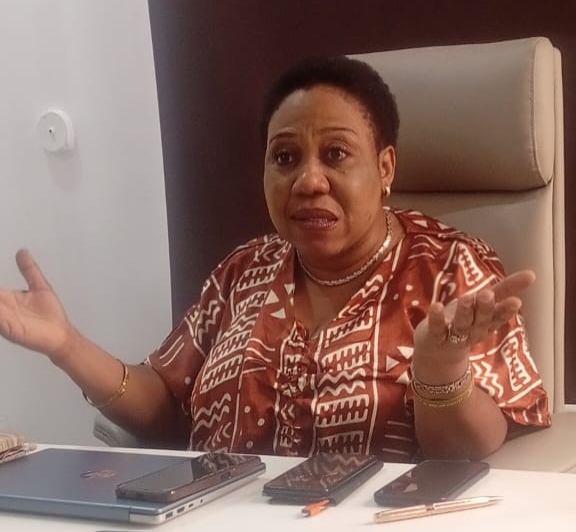
Amid this shifting landscape, one name continues to resonate across the association’s corridors, Chinyere Umeasiegbu. With over two decades of industry experience, the Managing Director of Global Links has carved a niche as a reform-minded leader with a track record of institutional impact.
As the first female National Deputy President of NANTA, Umeasiegbu represents a new leadership archetype, one defined by resilience, innovation and measurable outcomes. Her influence, both at zonal and national levels, has been widely acknowledged as instrumental in repositioning the association’s strategic outlook.
At a recent press briefing, she was quick to emphasise NANTA’s professional identity, distancing it from partisan politics.
According to her, the association remains committed to advancing the collective interests of practitioners across the travel, hospitality and tourism value chain.
Tracing her journey, Umeasiegbu recalled an early immersion into the travel world, shaped by her mother’s active involvement in the sector. That formative exposure, she noted, laid the groundwork for what would later become a lifelong professional calling.
A graduate of the University of Maiduguri and a Chevrolet Scholar, her career path reflects a blend of discipline and reinvention. From banking to the capital market, where she thrived as a stockbroker, her eventual pivot to entrepreneurship led to the establishment of Global Links, now a notable player in the industry.
Her transition, however, was not without its defining moments. At the peak of her capital market career, she made the difficult decision to exit, divesting a thriving portfolio in obedience to what she described as a higher calling, an inflection point that would ultimately redirect her professional trajectory.
Her entry into tourism administration began with participation in the Federal Government’s pilgrimage programme, before her relocation to the Eastern Zone of NANTA, where she rose swiftly through the ranks to become a central figure in its revival.
Under her leadership, the once-dormant Eastern Zone witnessed a remarkable turnaround, emerging as one of the association’s most vibrant and innovative arms. The transformation not only re-energised membership engagement but also set new performance benchmarks within the organisation.
On the global stage, her influence was evident in 2022 when NANTA facilitated Nigeria’s return to the World Travel Market (WTM) in London after an eight-year hiatus. The outing restored Nigeria’s visibility and earned international recognition, including coverage by the BBC.
Although the 2023 participation fell short, with limited representation, the momentum generated in the previous year underscored the association’s capacity to drive international engagement when strategically aligned.
Beyond global exposure, Umeasiegbu has prioritised value creation for members. Through targeted capacity-building initiatives, particularly in visa processing and international market access, she has equipped practitioners with practical tools to expand their businesses.
Her advocacy has also extended to regional integration, with emerging partnerships strengthening travel and tourism ties between Nigeria and The Gambia. A proposed road transport link to Dakar is already being positioned as a potential game-changer for regional mobility.
Looking ahead, she has unveiled an ambitious concept, “Space Tourism” aimed at exposing young Nigerians to the intersection of science, exploration and tourism. While acknowledging the absence of critical infrastructure, she frames the gap as an opportunity for long-term investment and policy innovation.
As NANTA stands on the threshold of its next chapter, the contest for leadership is shaping up to be more than a routine transition. It is, by all indications, a referendum on inclusivity, vision and the future direction of Nigeria’s travel and tourism industry.