
As artificial intelligence (AI) continues to transform industries across the globe, security experts and business leaders have called on emerging professionals in the security sector to harness its vast potential for building lasting, future-ready careers.
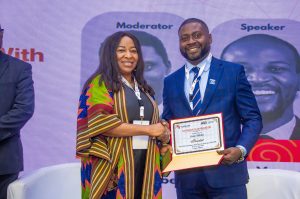
Speaking at the just-concluded Sub-Saharan Africa Security Conference (SASCON) 2025, held at The Civic Centre, Victoria Island, Lagos, Chief Executive Officer of LEAD Integrated Security Solutions (LISS), Ifeanyi Obinali, joined other experts in emphasizing that AI is no longer a futuristic concept or industry buzzword—it is an integral part of everyday life and modern security operations.

“AI is here; it’s not the next thing—it’s the now thing,” Obinali noted, stressing that AI technology is already embedded in everyday tools such as smartphones, security cameras, mobile banking apps, and even smart generators that alert users about anomalies. “As security professionals, we must stop seeing AI as distant. It’s already in our systems and part of our operations.”

Themed “Strategic Approaches to Security in Complex Africa,” the SASCON 2025 summit brought together thought leaders from across the continent to explore innovative and sustainable ways to address Africa’s evolving security challenges.
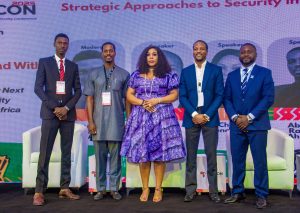
The discussion explored how early-career security professionals can integrate AI-driven solutions into their career strategies, including leveraging machine learning, smart surveillance, threat detection systems, and data analytics to enhance operational efficiency and asset protection.

Obinali also underscored the importance of education and awareness. “Young people, especially college students, need to go beyond using AI casually on platforms like Instagram. They must begin to understand the algorithms behind these systems and their practical implications,” a panelist stated. “There’s a need to incorporate AI education into university curriculums so that graduates are not just aware of it but equipped to innovate with it.”

One of the key examples cited was the recent deployment of TMR Weather—a cutting-edge technology that uses environmental sensors to track global patterns. This was presented as a model for how emerging tools can be applied in real-time decision-making and risk mitigation.

He challenged African professionals and governments to stop playing catch-up, pointing to how teenagers in other parts of the world are building AI-powered websites, coding applications, composing music, and earning millions. “We cannot afford to be left behind. It’s time to take ownership of innovation on this continent,” he urged.

However, while the potential of AI was praised, participants also warned about the ethical and security concerns surrounding its use. “Not all information should be fed into AI systems,” one expert cautioned. “Before adopting any AI tool, it’s crucial to understand their data protection policies. How are they protecting your information? What safety protocols are in place?”

The session concluded with a strong message to organizations and governments to invest in intrusion detection systems and cybersecurity tools to safeguard critical infrastructure and sensitive information from cyber threats.

With AI redefining how security is approached, experts agreed that the key to future success lies in embracing innovation, pursuing continuous learning, and building cross-sector partnerships that make technology work for the people it is meant to protect.
AI Takes Center Stage As Security Experts Urge Next-Gen Professionals To Embrace Tech Tools