
A retired military intelligence expert, Lieutenant Colonel Freddie Grounds, has praised the renewed security partnership between the United States and African nations aimed at preventing terrorist groups from establishing operational bases across the continent through actionable intelligence and coordinated regional responses.
Grounds, in a policy paper titled The US 2026 Counterterrorism Strategy and Its Implications for Nigeria and the Sahel, described the new American approach as a major shift in global counterterrorism policy driven by lessons from past military interventions and the evolving geography of extremist threats.
According to him, the United States has moved away from large scale troop deployments and now prioritises intelligence driven operations, strategic partnerships, advisory support and local capacity development in fragile regions facing persistent extremist violence.
He noted that Africa, particularly Nigeria and the wider Sahel region, has become central to Washington’s security calculations because of the continued activities of extremist organisations including Boko Haram, ISWAP and al Qaeda linked groups exploiting weak governance structures and porous borders.
Grounds stated that the United States demonstrated its commitment to regional stability by deploying about 200 military personnel to Nigeria in early 2026 to support intelligence sharing, training and advisory operations under the authority of the Nigerian government.
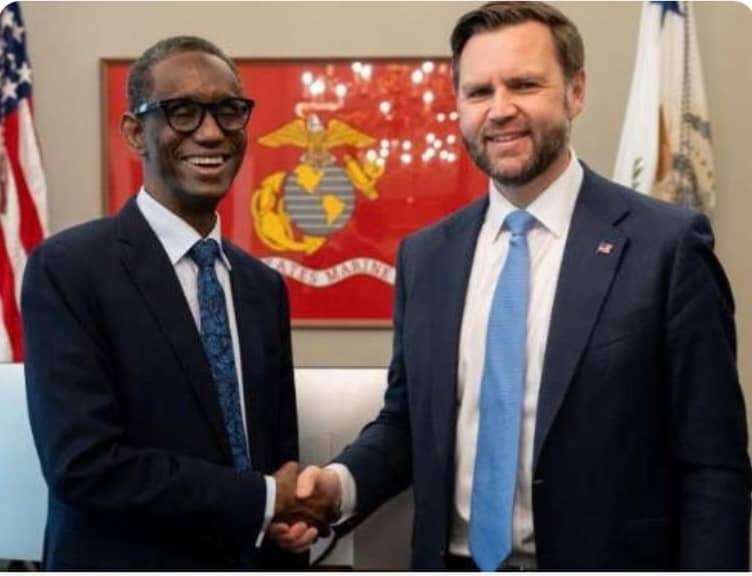
He also referenced the recent visit of the National Security Adviser, Mallam Nuhu Ribadu, to the United States where he held high level engagements with senior American officials aimed at deepening bilateral security cooperation between both countries.
The security analyst further highlighted the conclusion of Exercise African Lion 2026, the annual multinational military exercise led by the United States across North and West Africa, involving more than 5,600 troops drawn from over 40 countries, including African partners and NATO allies.
At the centre of the new American strategy, Grounds explained, is a stronger commitment to actionable intelligence sharing designed to help African governments disrupt extremist cells before they gain operational footholds in vulnerable communities.
He added that the strategy recognises that sustainable security can only be achieved through local ownership, regional cooperation and the strengthening of African security institutions capable of responding swiftly to emerging threats.
Grounds said the policy also places emphasis on protecting vulnerable populations frequently targeted by extremist violence, including Christian communities and other civilians exposed to attacks across conflict zones in the Lake Chad Basin and the Sahel.
He described Nigeria as a frontline state in the regional fight against terrorism because of the persistent threats posed by Boko Haram and ISWAP whose activities continue to spread across Nigeria, Niger, Chad and Cameroon.
According to him, growing cooperation between Nigeria and the United States since 2025 has already produced measurable security gains, including coordinated operations that reportedly disrupted ISWAP camps and eliminated scores of militants linked to Islamic State activities in parts of northern Nigeria.
Beyond military operations, Grounds commended Nigeria’s broader counterterrorism strategy which combines security offensives with deradicalisation programmes, economic interventions and community engagement initiatives aimed at addressing the root causes of violent extremism.
He also praised the Nigeria United States Joint Working Group established in late 2025 to coordinate border security, intelligence sharing and counterterrorism assistance across the region, stressing that insurgency in the Sahel and Lake Chad Basin remains deeply interconnected with organised crime, arms trafficking and smuggling networks.
Grounds maintained that the success of the US 2026 Counterterrorism Strategy would ultimately depend on governance reforms, sustainable financing, regional cooperation and the ability of African governments to strengthen accountability while delivering security and economic stability to vulnerable populations across the continent.